
Roof Leak Detection in Rowland Heights, CA 91748
In short: Roof Leak Detection in Rowland Heights, CA 91748. Detection here means accounting for decades of layered old repairs. We diagnose the true source with moisture meters and thermal imaging, repair it properly, and water-test before we leave. Call (888) 974-0663 — our call representatives are available 24/7 for emergencies.
The stain on your ceiling is almost never directly below the leak. Roof Leak Fix Pros is the local choice for roof leak detection in Rowland Heights, CA 91748. Rowland Heights is the adjacent San Gabriel Valley community with 1960s–80s homes plus newer infill construction.
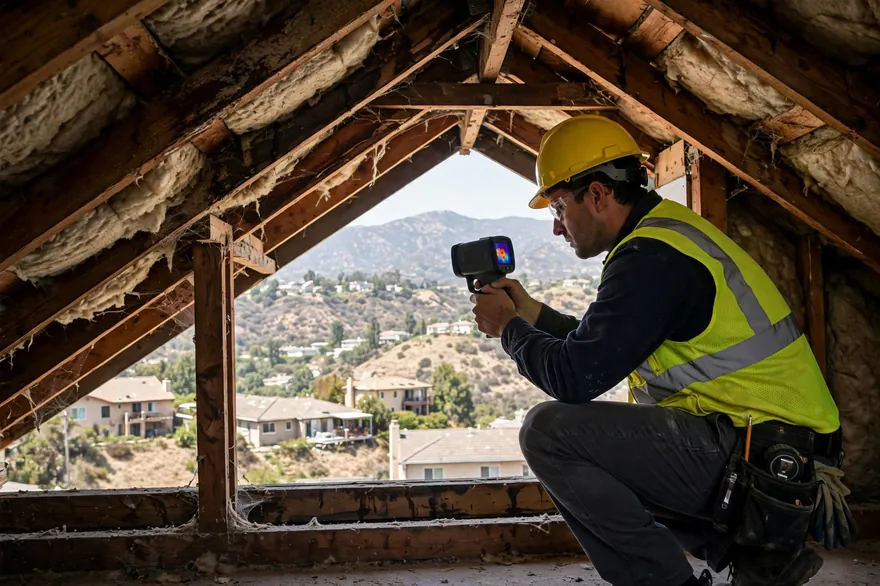
Roof leak detection is diagnostic work: finding the exact entry point before any repair begins. We map interior evidence with moisture meters, inspect the roof detail by detail, and run controlled water tests when needed — so the repair targets the real source, not the stain. A mix of flat and hillside lots means drainage and valley issues vary street by street.
Signs Your Rowland Heights Home Needs Professional Leak Detection
Stains that grow after rain and fade between storms, musty attic odors, peeling paint near ceilings, and insulation that is damp or compressed all point to an active leak with a hidden source. Mature landscaping sheds heavy debris loads into valleys and gutters each fall.
The trickiest sign is a previous repair that didn't hold — it usually means the real entry point was never found. That's a detection job, not another patch.
- Stains that grow after rain
- Peeling paint or bubbling drywall
- A previous repair that failed
- Ceiling stains with no obvious roof damage
The Rowland Heights Factors That Hide Leaks
Local conditions shape how leaks behave. A mix of flat and hillside lots means drainage and valley issues vary street by street. Wind-driven rain pushes water uphill under shingles, and multi-layer or complex roofs give water more paths to travel before it shows inside.
In Rowland Heights we also see leaks masked by recent re-roofs where new shingles cover failing flashing underneath — the roof looks fine from the street while water works in at the details. Mature landscaping sheds heavy debris loads into valleys and gutters each fall.
- Intermittent leaks in specific weather
- Multiple small entries, not one big hole
- Wind-driven rain entering uphill
- Water traveling far from the stain
Why Leak Detection Matters Before Any Repair in Rowland Heights
Guessing at the source is the most expensive mistake in roofing. We regularly meet Rowland Heights homeowners who paid for two or three wrong repairs before the real entry point was found. Rowland Heights is the adjacent San Gabriel Valley community with 1960s–80s homes plus newer infill construction. Detection costs a fraction of a misdirected repair.
Our diagnosis ends with a written report — photos, moisture readings, and a repair plan — so you know exactly what failed and what the fix will cost before committing.
- Written diagnosis with photos and readings
- Repair plan with upfront pricing
- Pinpoints the true entry point, not the stain
- Prevents paying for wrong-guess repairs
Related Services
Helpful Roofing Guides
Roof Leak Detection in Rowland Heights FAQs
How long does leak detection take in Rowland Heights?
Most Rowland Heights homes take one to two hours. Complex roofs or intermittent leaks can take longer, especially if we need to run controlled water tests. We quote the time upfront.
Will detection damage my roof?
No. Our inspection is non-destructive — visual examination, moisture meters, and controlled water application. We never lift shingles or open anything without your approval.
Why can't I just find the leak myself?
From the attic you can sometimes see daylight or stains, but the entry point is usually uphill and sideways from where water appears. Without moisture meters and knowledge of how water travels, DIY detection usually seals the wrong spot.
Roof Leak Detection in Rowland Heights 91748: How Local Conditions Change the Work
Many original tile roofs in the hills are now 40+ years old; the tiles outlast the underlayment, so leaks start beneath perfectly good-looking tile. For roof leak detection work, that changes the job in a practical way: Detection in these neighborhoods means accounting for roof age: with so many 1950s–1980s roofs, we expect layered repairs from previous owners, and each old patch is a suspect. Water testing is used more often here than in newer suburbs because decades of sealant and flashing patches hide the true entry point from visual inspection alone.
Two-story 1970s tract homes along the Colima Road corridor commonly have complex roof geometry: multiple valleys and dead valleys that collect leaves. A crew that has worked Rowland Heights roofs before starts the inspection at these known failure points instead of treating the roof like any other in the county.
The practical upshot for homeowners: the estimate reflects what Rowland Heights roofs actually need. We photograph the specific conditions we find — the valley buildup, the sun-aged boots, the wind-lifted tabs — and the repair plan addresses those, not a generic checklist. If a neighboring home had the same repair last year, we can show you how it has held up, because these neighborhoods repeat their patterns.
What to Expect: Timing and Cost Factors
Leak detection is a diagnostic service, and a good one is methodical. We start inside — attic inspection with moisture meters, tracing stains back along rafters because water routinely travels feet from its entry point. Then the roof surface: every penetration, valley, sidewall, and ridge within the suspect zone gets hands-on inspection. When the source still hides, we use controlled water testing, working from the lowest suspect point upward in sections until the leak reproduces. Thermal imaging helps on the right roof at the right time of day, but it is one tool among several, not magic. A typical residential detection visit takes one to three hours. Pricing reflects access difficulty and roof complexity, not the size of the stain on your ceiling. You receive a photo-documented report showing the exact entry point and the recommended repair — the report alone often pays for itself by preventing a contractor from replacing the wrong section of roof.
More Questions About Roof Leak Detection in Rowland Heights
Why can't you just look at the stain and know where the leak is?
Because water travels. It enters at one point, runs along rafters, decking, or underlayment, and shows up feet away — sometimes in a different room. The stain marks where water exited, not where it entered. Real detection traces the path backward with meters, inspection, and controlled water testing.
How long does a leak detection visit take?
Most residential visits take one to three hours depending on roof size and complexity. Larger or multi-zone roofs take longer because each suspect area must be tested separately, working from the lowest point upward.