
Roof Valley Leak Repair in City of Industry, CA 91748
In short: Roof Valley Leak Repair in City of Industry, CA 91748. Valley work here is debris work as much as roofing. We diagnose the true source with moisture meters and thermal imaging, repair it properly, and water-test before we leave. Call (888) 974-0663 — our call representatives are available 24/7 for emergencies.
Roof valleys carry the most water of any roof feature — when they fail, they fail big. Roof Leak Fix Pros is the local choice for roof valley leak repair in City of Industry, CA 91748. Heavy truck-traffic vibration and rooftop equipment penetrations add leak points most residential roofers never see.
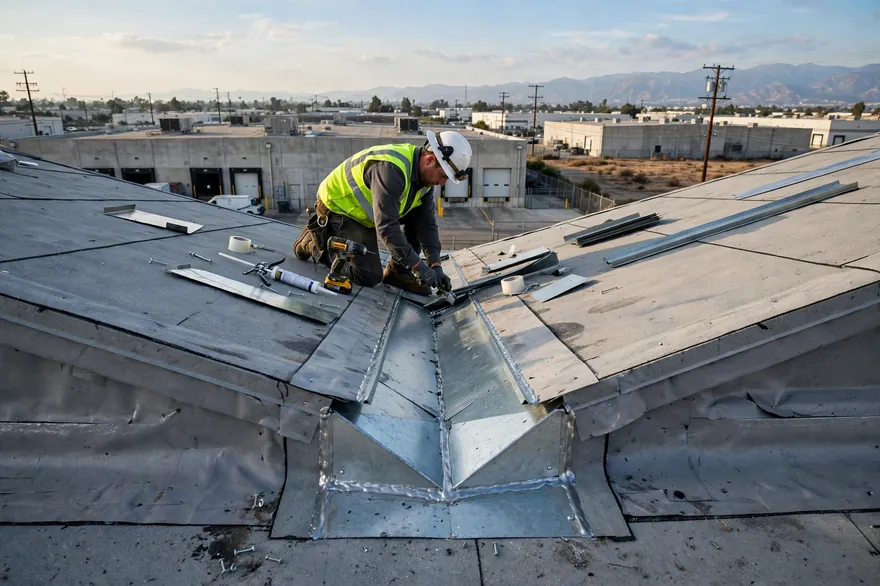
Roof valley leak repair restores the channels where two roof planes meet. We clear and inspect the valley, remove failed material, install new valley metal or membrane with proper underlayment, and re-weave or re-lay the surrounding roofing — then flow-test with water. The City of Industry is an industrial city of warehouses and tilt-up commercial buildings with large flat and low-slope roofs.
What Valley Repair Costs in Hacienda Heights
A single valley rebuild is a mid-range repair — more than a pipe boot, far less than a re-roof. Cost depends on valley length, roofing material, and whether decking needs replacement underneath.
Multiple failing valleys on an aging roof may signal it's time to discuss re-roofing honestly. Flat commercial roofs here face ponding and seam failures, especially after atmospheric-river storms. We'll give you both numbers and let you decide.
- Priced by valley length and material
- Decking repairs quoted upfront
- Honest re-roof comparison when warranted
- Call (888) 974-0663
Why Valleys Leak on City of Industry Homes
Valleys do the hardest work on your roof, and in City of Industry they take extra punishment. The City of Industry is an industrial city of warehouses and tilt-up commercial buildings with large flat and low-slope roofs. We find corroded valley metal, underlayment worn through by years of concentrated flow, and valleys installed without proper width or underlayment.
Debris is the silent killer: leaves and needles build up, water dams behind them, and it wicks sideways under the shingles — a leak with no visible roof damage.
- Ice and water backup in cold snaps
- Corroded valley metal
- Worn-through underlayment
- Debris dams forcing water sideways
Our Valley Repair Process
We open the valley, remove failed shingles and underlayment, inspect the decking for rot, install ice-and-water membrane plus new valley metal with proper overlaps, then re-lay the roofing with correct valley cuts.
The repair gets flow-tested with water to confirm drainage before we sign off. Heavy truck-traffic vibration and rooftop equipment penetrations add leak points most residential roofers never see. Surrounding shingles are blended so the repair doesn't stand out.
- Failed material fully removed
- Decking inspected for rot
- Ice-and-water membrane + new valley metal
- Correct valley cuts and overlaps
Related Services
Helpful Roofing Guides
- Roof Valley Leaks: Causes and Lasting Repairs
- Why Roofs Leak in Heavy Rain (But Stay Dry in Light Showers)
Roof Valley Leak Repair in City of Industry FAQs
Why do valleys leak more than other roof areas?
Valleys concentrate the runoff of two roof planes into one channel — many times the water volume of a normal section. More water plus more debris equals more failure points.
How long does a valley repair take?
Most single-valley repairs are completed in one day, including flow testing. Longer valleys or decking replacement can extend to two days.
Is valley repair covered by insurance?
Storm-damaged valleys usually are; wear-and-tear corrosion usually isn't. Our documentation helps your adjuster make the right call.
Roof Valley Leak Repair in City of Industry 91748: How Local Conditions Change the Work
Ponding is chronic on older built-up roofs with failed drainage; standing water accelerates membrane breakdown at every seam and penetration. For roof valley leak repair work, that changes the job in a practical way: Valley work here is debris work as much as roofing: mature trees overhang roofs across these neighborhoods, and packed valleys hold moisture against the metal year-round. We rebuild valleys with full ice-and-water shield beneath new metal and give every homeowner a straight answer about how often their specific valley needs clearing.
The Puente Hills Mall area and the Colima Road commercial strip hold big-box roofs where leaks show up far from their source as water travels along deck seams. A crew that has worked City of Industry roofs before starts the inspection at these known failure points instead of treating the roof like any other in the county.
The practical upshot for homeowners: the estimate reflects what City of Industry roofs actually need. We photograph the specific conditions we find — the valley buildup, the sun-aged boots, the wind-lifted tabs — and the repair plan addresses those, not a generic checklist. If a neighboring home had the same repair last year, we can show you how it has held up, because these neighborhoods repeat their patterns.
What to Expect: Timing and Cost Factors
Valleys carry more water than any other part of the roof, so they fail first and leak hardest. The usual culprits: debris packed in the valley holding moisture against the metal, underlayment worn through where water concentrates, and valley metal that was cut too short or never properly lapped. Repair means clearing the full valley, lifting shingles or tile on both slopes, and installing new valley metal with a full width of ice-and-water shield beneath — closed-cut or woven shingle valleys are rebuilt to shed water cleanly. We also look uphill: a valley that collects leaves from an overhanging tree needs a maintenance plan or the repair buys only a few seasons. Most valley repairs take a full day. Cost scales with valley length and how many courses must be opened on each side.
More Questions About Roof Valley Leak Repair in City of Industry
Why do valleys leak more than the rest of the roof?
A valley drains two roof slopes at once, so it carries far more water than any other section. Debris packs in, holds moisture against the metal, and the concentrated flow wears underlayment faster. Valleys are the hardest-working and shortest-lived part of most roofs.
How often should valleys be cleaned?
In neighborhoods with mature trees, at least once each fall before the rains and once mid-winter. A valley packed with leaves is a dam — water backs up under the shingles on both sides. Regular clearing is the cheapest leak prevention there is.
Why City of Industry Roofs Need Roof Valley Leak Repair Before the Next Storm
The City of Industry is overwhelmingly commercial and industrial, so most roofs here are large low-slope or flat systems: TPO, EPDM, modified bitumen, and built-up. That is exactly the kind of slow-developing failure that roof valley leak repair is designed to catch and correct. After the work is done, we water-test the repair and photograph the result, so you have proof — not promises — that your City of Industry roof is ready for the next atmospheric-river storm. Call (888) 974-0663 to schedule; our call representatives are available 24/7 for emergencies.